Friday, October 13, 2023

Driving Forward: The Electrified Horizon of Sports Cars


As the automotive horizon of 2023 stretches ahead, we find ourselves not just on the precipice of technological evolution but a deeper, more symbolic transition. The amount of vitriol directed at Lotus EVs continues to baffle me considering they are being mandated in this direction.  The shift to Electric Vehicles (EVs) is far more than just a change of fuel source; it’s about reimagining the very soul of mobility. Many people associate the sound and feel of ICE as the soul of a sportscar.  Maybe this is the source of all that venom?  I created a video: HERE that makes a different argument.  The critical question that lingers is: can the electrification of our beloved sports cars capture their essence?  I say yes.  This article argues this point and discusses the upcoming Lotus EV sportscar - the Type 135.

concept Type 135 illustration credit: Car & Driver


Lotus's Electric Endeavour Lotus, historically celebrated for its dedication to lightness and simplicity, isn't just adapting but evolving. The Evija was created as an EV halo - though out of reach for most of us.  Their upcoming sportscar EV, the Type 135 (see above), aims to be a beacon of this new chapter, blending their cherished ethos with the promise of electric power and 'affordability'.   This rendering is essentially an Emira that has been tweaked to eliminate intakes.  I found this image in a C&D article: HERE  MotorAuthority also write a good article: HERE

LEVA

The Type 135 is slated for a 2025/2026 release and utilizing the new Lightweight Electric Vehicle Architecture (LEVA) platform (see image), the Type 135 promises to carry the legacy of its forebears like the Elise and Evora GT, albeit with an electric heartbeat.  I'm especially pleased with the weight distribtion of this LEVA chassis.  Our video discusess this in more detail: HERE


Broader Horizons: The Sports Car Realm

The Type 135 is just a single star in a vast galaxy of change. Like it or not, across brands and borders, the sports car realm is pulsating with electric energy. Traditionalists might argue that the purr of a gasoline engine is irreplaceable, but the whispering roar of an electric motor, with its instant torque and seamless acceleration, is crafting its own legacy on racetracks and winding roads alike.  Have you heard the sound of the Porsche Cayman EV race car?  Watch this fun video of it racing at the Race Of Champions: HERE

Behind the Scenes: The Evolution Continues With factories, like Lotus's iconic hub in Hethel and new Wuhan factory, gearing up for this electric future, it's evident that this isn't just a phase—it's the future. And as manufacturers delve deeper, the integration of performance with sustainability (this can be argued) is becoming clearer.  With the legislation that is in place in most countries, what choice do they have but move towards EV?  Porsche's eFuels may become a savior for fans of ICE.  They ran all their cars on this fuel at their recent Rennsport Reunion held at Laguna Seca.  This fuel holds potential.

911 GT3R - bad to the bone with the price tag to match!

Financial Frontiers & The Market Landscape As the EV market expands, pricing plays a pivotal role in shaping its trajectory. While Lotus's Type 135 starts at an estimated $80,000, placing it in competition with models like the Porsche 718 EV, the broader market offers a spectrum. The next decade promises a range that caters to both the elite and the everyday enthusiast.  VW have shown an EV GTi that looks great and should be more affordable.  The new e-Ray from Corvette portends their all electric Vette that certainly is in the works.  What better bang (pun intended) for the buck exists than the Corvette?  I expect Chevy's Vette team to deliver.  The first manufacturer to deliver a <$50k EV sportscar will likely gain many a client.  Though this may not seen for another 5-10years.


Concluding Thoughts The journey from gas pumps to charging stations isn't just about changing where we stop on long drives; it's about reimagining the journey itself. If I am honest, my favorite road trips were not 100% about the car I was driving.  They were/are journeys of experiences and the path is as important as the ride.  ICE will continue to power most of my foreseeable road trips but a time will come where an EV may be a viable option.

See you on the road and track, and remember: it's not about what powers the car, but the passion that drives it.


Monday, October 9, 2023

Oil & Filter Change Intervals?

So how often do I really need to change my oil and filter?  We attempt to shed some light on this subject in this blog post.

Oil is the lifeblood of an engine. As a vehicle operates, its engine oil accumulates contaminants ranging from metal shavings to dirt. The oil filter’s role is to capture and hold these impurities, ensuring the engine receives clean, optimal-performing lubrication. For this reason, regular replacement of the oil filter is crucial. In this report, we focus on the importance of oil filter change intervals for  the Lotus Elise & Exige equipped with the Toyota 2ZZGE engine.  But the principles apply to most cars - especially those with 4 bangers.

Why Regular Oil Filter Changes Are Crucial

1. Contaminant Capture: As the oil circulates, it picks up various contaminants. Over time, as the filter traps these impurities, it can become clogged, potentially allowing dirty oil to bypass it and circulate back into the engine.

2. Maintaining Oil Flow: A clogged filter can restrict oil flow. In engines like the 2ZZGE, which rely on oil for both lubrication and for actuating the variable valve timing system, compromised flow can significantly impact performance and lead to potential damage.

3. Engine Longevity: Regular filter changes help maintain engine health by ensuring that clean oil lubricates and cools the internal components. Dirty oil can lead to premature wear and potential engine failures.

Recommended Intervals 

While general advice for modern engines suggests changing the oil filter with every oil change (typically every 5,000 to 7,500 miles), the specific requirements can vary based on driving conditions and style.

For the Lotus Elise & Exige, which often sees spirited driving or even track use, more frequent changes might be beneficial. Lotus, in its official documentation, generally recommends an oil and oil filter change every 7,500 miles or annually for regular driving conditions. See the following chart: HERE  

Factors Affecting Change Intervals

1. Driving Style: Engines subjected to hard driving, frequent short trips, or prolonged idling might benefit from shorter filter change intervals.

2. Oil Quality: High-quality synthetic oils, like Motul, often offer better protection and longer life than conventional oils, potentially allowing for longer intervals between changes. 

3. Environmental Conditions: Driving in dusty or dirty environments can lead to quicker filter clogging, necessitating more frequent changes.


For those driving in harsher conditions or using their car for performance-oriented drives frequently, a more conservative interval of 3,000 to 5,000 miles is often suggested by experts and enthusiasts.  If you are racing for the checkered flag, we would suggest an oil change after every other race weekend though we would leave the oil filter in place.  Why?  Keep reading....

The Intricacies of Oil Filter Operation: A Brief Overview

I spent time in the automotive filtration market as a media supplier to various OEM filter manufacturers.  During these years I learned a fair amount about how an oil filter actually works. 

An oil filter's primary role is to ensure clean oil circulates within an engine, safeguarding against premature wear and potential damage. At the heart of this mechanism is the filter media, often made from synthetic fibers or pleated paper, designed to trap and hold contaminants as oil passes through.  

As oil courses through the engine, it collects various impurities, from microscopic metal shavings to larger debris. The oil filter acts as a barrier, catching these contaminants in its media. Interestingly, a slightly dirty filter can, paradoxically, increase its filtration efficiency.   So a new filter will actually catch less than one that is slightly dirty.  Why does matter?  Keep reading...


As contaminants accumulate on the surface, they form a layer that can aid in trapping even smaller particles. This phenomenon is termed "filter cake." While this initially enhances the filter's effectiveness, there's a tipping point. Over time, as the filter becomes more clogged, it can restrict oil flow, which may lead to filter bypass valve opening, allowing unfiltered oil into the engine.

Since a normal oil change in these cars does not drain 100% of the oil (oil coolers and lines), some dirty oil will remain in the system.  I advocate leaving the oil filter in place for twice the interval that you choose to do for the oil.  Though I do recommend that the filter be changed at a max of 7,500 regardless.

Conclusion

While the general guideline for the Elise & Exige suggests an oil filter change every 7,500 miles, real-world conditions, especially spirited driving, might require more frequent changes. The filter can also be considered separately with intervals that are twice as long but a mazimum of 7,500.  Owners should always consult their vehicle's manual, consider their driving habits, and consult with specialists or trusted mechanics to determine the best maintenance schedule for their specific situation. 


Thursday, October 5, 2023

Factory Bushes Will Walk!

The factory wishbone bushes have a tendency to wander out.  Our cars are driven in a spirited manner, usually, and this will expedite this issue.  We have seen this problem on street only cars along with track oriented cars.  This latest example is a street car with 38k miles on it.

Here is a factory bush moving out
This shows the damage to the wishbone after making contact with the subframe

This shows the subframe chassis damage

This is an easy problem to spot with our cars.  Remove your rear wheels and inspect where the wishbone attach to the subframe.  If you see the bush is moving out, then please consider addressing this ASAP.


We have three options: OEalt Bushes, MONOballs, and UNIballs.  Give us a call if you have any questions.


Wednesday, August 16, 2023

Supercharger Longevity Requires Proper Air Filter Maintenance

 This is a reprint from our partners, Superchargers Online.

Air Filters and Your Supercharger


The first line of defense for your supercharger is the air filter.    Without proper filtration, unwanted dirt and debris can be passed through the supercharger causing knicks and gouge the rotors leading to premature wear, noise, and lower performance.   Foreign material passing through the inlet track of a supercharger is in the top 10 causes of supercharger failure. 

 Key points for proper filter maintenance:

  • Use a quality OEM or aftermarket filter

  • Inspect air filter and seals with every oil change

  • Proper cleaning / replacement intervals

  • Use quality “ cold air” boxes, open element in the engine bay is not good

  • Off Road vehicles should have a shield protecting the air filter from debris and should be cleaned after every use.  Especially dune / sand cars. 

  • NEVER run your supercharger without proper filtration on the inlet 

Monday, August 7, 2023

Rubber Brake Line Failures

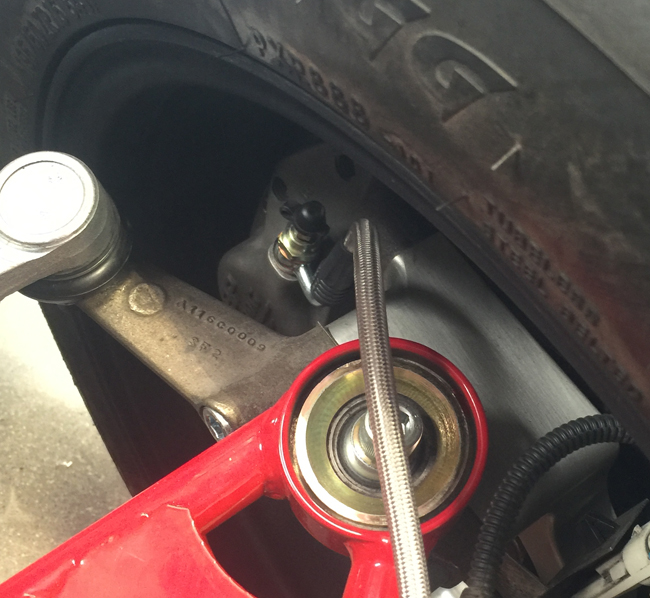
 It seems sometimes, when it rains, it pours.  On one day last week, we had two clients come in with failed OEM rubber brake lines.  One of these cars, a '06, had <35k miles and the other, a '05, had 250k miles!  One of the cars that failed had a very slow leak and the owner was not paying attention to the reservoir as it was getting drained.  The other car, with lower mileage, had a massive failure that kept the owner from bringing the car to us.

These are the first two failures that I had heard about.  Early Elises have lines that are now nearly 20years old.  Rubber does not last forever and mileage is not necessarily a good measure of when to change them.   I'm expecting to hear about more failures, in the coming weeks and months unless owners take preventative measures.

So what can be done?  Replace the lines.  You can either order new factory rubber lines or upgrade to our Stainless Steel lines.  Our lines will most likely, last the lifetime of the vehicle.  All of our lines are DOT-spec and encased in a polyurethan housing so that stainless does not saw through any adjacent parts.  

Replacing your lines is not overly hard but varies based on which model you have.  The Elise front lines can be done without removing the clam - while the Exige requires front clam removal.  The rear lines, on both cars, can be done without clam removal.

Our brake line solutions come in a couple of different flavors:

QWKbleed Lines: We recommend this kit for the front calipers as they allow you to bleed both sides of the caliper properly.  The stock caliper uses a budget minded approach with the lines entering a port that would normally feature a bleed nipple.  Our innovative QWKbleed lines make that port into a bleeder so you can get out all of the air bubbles during the bleeding process.


SS Lines:  These are a simple and cost effective upgrade.  If you want to save some money and get a solution that works, this is the one.  We also sell them in a 2 pack for the rears: HERE

For street cars, we recommend bleeding your brake fluid every year and flushing every 2-3 years.  Track guys should be bleeding before every event and flushing once a year.  Our Motul RBF600 has been a great solution for road and track.

If your car still has the stock rubber lines, regardless of mileage, I would stongly suggest replacing them ASAP.  Have a look at our offerings or give us a call if you have any questions.


Monday, July 31, 2023

Massive Brake Rotor Wear!

 We get to see cars in various cosmetic and mechanical condition thanks to offering Service.  An Elise came in recently for a fluid change and the client mentioned his brakes were making some 'noise'.  When we inspected the brakes, we came across wear we had never previously seen.  See the picture below of the rotor that is worn so badly that the internal vanes are starting to show!


Lotus recommend that you replace your rotors when they get to 24mm thickness.  This owner let it go a bit longer than that!  The good news is that his rotors still 'stopped' the car well enough for him to drive 30miles to our shop!  No, we don't recommend trying this at home!

We dug into our Service files to see what may have happened here.  The car had just under 31k miles on it when it arrived this time.  The last time we had serviced it, the car had 27k miles.  We had installed new CL RC6 pads, front and rear and the rotors were used but healthy.  The car is used predominately for track use but lately the client had been driving a fair amount on the street.  Hmmm....

We introduced the CL pads to the Lotus community because of how well they stopped when then are cold.  Getting heat into Lotus brakes is a challenge so a pad that can bite, when cold, seemed like a bonus.  Since this car was getting also used on the street, the brakes were probably cold much of the time.  This suggests that the CLs will wear out the rotors at a faster rate.  Most people are getting 15-25k miles on a set of rotors.  These rotors were worn out much faster.

We discontinued the CL back in 2018 as the dust they generated was too corrosive for our liking.  Plus we were seeing accelerated wear that made us concerned about rotor life.  This is another example of the tradeoffs that we need to understand when choosing brakes.

I have written about the different types of brake pads: HERE.  Pad choice, like tires, is about tradeoffs that each of us are willing to accept!

Wednesday, July 26, 2023

New Product Update: '05 Throttle Cable

 Over the years, sticky throttle cables have become an issue. A client's car came to us with throttle cable problems. His throttle action was very stiff as his cable was beginning to fail.  We called our transCABLEs supplier to see if they could help us.  Lucky for us, this is a specialty of theirs!  We sent them the faulty cable and they quickly sent us a prototype.

The prototype on this car will be tested to confirm but we anticipate being able to offer a much more durable solution with less back lash for improved action. The picture is the stock cable.

I posted a video on our IG showing the amount of backlash in the stock cable.  Watch it: HERE

We pulled another cable from our latest 111RS build to compare with the first one that we built the prototype from.  It appears to be the same but we will send this over to our manufacturer to confirm.


The action of the proto was excellent - so much so that I need one for my car!  It is much smoother that what is on our latest 111RS003 and the ArtCar2.  

Our client who has been running the proto has been very happy.  

Hi Shinoo,

I drove a good amount this weekend. The pedal feels so much better than before. I am still getting used to it, but the responsiveness and modulation of the pedal significantly improved....Overall, the car is more responsive and even feels faster than before. I am really happy with the product so far.

SG

His accelerator pedal had been modified by a previous owner so we are checking another cable to make sure.  Double checking dimensions is critical when you reverse engineer a product that may have been previusly modified.  We will continue to monitor this proto cable.


Friday, July 21, 2023

shiftR111 Fitment into 1ZZGE & V6s

 Our shiftRs have been successfully fitted to cars overseas that we don't see in the US.  Clients have fit them to Exige V6s and Elises with 1ZZGE engines.  Right Hand Drive has also been done.  Our new shiftR111 2.0 version should work as well in these fitments.  Since these cars have different gearboxes, our TRANScables will not work.


Friday, July 14, 2023

RS343 Monolite IIs

 The forged RS343 Monolite II test samples arrived and we were able to fully assess them.  Not only are they lighter but they are really beautiful.  We are very happy with them!  

The fronts came in at 11 lbs and the rears at 13.35lbs. Lighter than the original RS134 Monolites - which used to be the lightest wheels you could buy for the Lotus Elise/Exige/211.  RS343 are the new lightweight champ!  Production has started and we should see them this Fall.


You can see where they machined material off the edges and sides of the spokes


When you look at them straight on, they look like the original RS134 Monolites